

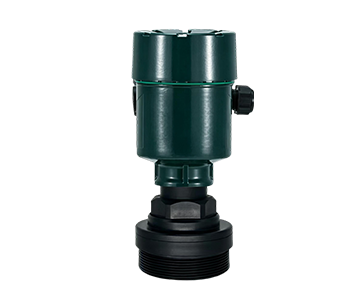
80GHz radar water level gauge)DPLRD81H
- Continuous monitoring of river, reservoir and open channel water levels
- High and low water level alarms and flood prevention warnings
- Automatic start and stop of pumps and remote scheduling
- Interconnection of water level, flow and data collection systems
- Long-term online monitoring at unmanned stations
- Data communication with RTU, PLC and cloud platform
Parameters
80GHz Radar Water Level Gauge (DPLRD81H), applied in reservoirs, hydropower stations, and river water level measurement. It features an integrated lens antenna with a small beam angle, a function to store false echoes from interfering signals, a zero-point echo function to prevent false alarms, adjustable signal gain, a convenient-to-adjust Bluetooth function, adjustable serial port parameters, angle measurement function, low power consumption, with display, and programmable by a programmer.
1. Non-contact measurement, unaffected by water quality and debris
The radar water level gauge measures the water surface height using radar waves and does not require direct contact with the water body. Therefore, it is not affected by water quality corrosion, sediment wear, floating object entanglement, and water plant attachment. It is suitable for long-term installation in rivers, reservoirs, sewage ponds, and drainage pump stations, reducing the frequency of cleaning, maintenance, and replacement, and lowering the customer's long-term usage costs.
2. Strong environmental adaptability, more stable in complex weather conditions
Compared to some contact or ultrasonic measurement methods, the radar water level gauge is less susceptible to temperature changes, humidity, fog, steam, and dust. In outdoor, high-humidity, large temperature difference, or certain moisture conditions, it can still provide relatively stable water level data, suitable for monitoring sites that require 24/7 operation and unmanned.
3. High measurement accuracy, supporting continuous real-time monitoring
The radar water level gauge can continuously measure the distance between the water surface and the sensor and quickly calculate the real-time water level. It has a fast response speed and good data continuity, enabling high-precision water level monitoring, high and low water level alarms, and trend analysis, providing timely and reliable data support for flood prevention warnings, pump station control, and water conservancy scheduling.
4. Flexible installation, facilitating remote monitoring and system integration
The radar water level gauge is usually installed above rivers, water tanks, or pump stations, without the need to modify the channel structure and without affecting the water flow state. It can be connected to RTU, PLC, data acquisition terminals, and cloud platforms through standard signals, supporting remote monitoring, automatic alarms, pump linkage, and centralized data management, helping customers achieve the automation and digitalization upgrade of water conservancy facilities.