

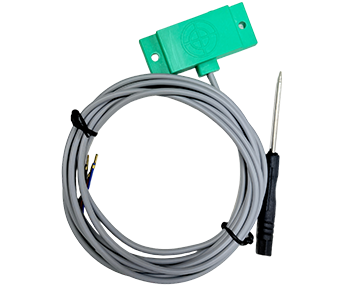
DPLC-HD10-UR002
- Food & Beverage: Focused on detection for liquids, powders and plastic packages.
- Water Treatment & Chemical: Wide‑ranging level‑sensing applications, highlighting non‑contact and container‑penetrating detection.
- Packaging & Printing: Standardized detection for paper, films, labels and plastic packages.
- Plastics & Rubber: Strong demand for pellet level and plastic part detection, complementing inductive sensors.
- Agriculture & Grain: Stable applications for silos, bins and granular‑material detection with sustained market demand.
Parameters
The M12 capacitive sensor is applicable to industries such as food and beverage, medicine, water treatment, chemical engineering, packaging and printing, plastic and rubber, agriculture and food, textiles, glass and ceramics, cosmetics, wood and building materials, environmental protection and recycling, and electronic manufacturing. It can detect non-metallic materials such as liquids, powders, particles, plastics, glass, paper, and wood, and is suitable for liquid level, material level, presence or absence detection, and workstation positioning. It can meet the detection requirements for non-metallic targets and complex media.
It should be noted that the detection effect of the capacitive sensor is affected by the dielectric constant of the material, the wall thickness of the container, humidity, loading, and the installation environment. When used for website selection and description, it is recommended to remind the customer to provide the measured medium, container material, and target distance, so as to confirm the specific model.
1. The material adaptability is wide, and the detection objects are more diverse.
Capacitive sensors can detect both metals and non-metal materials such as plastics, glass, wood, paper, liquids, powders, and particles. Compared with inductive sensors, it can cover more materials and media, reducing the problem of frequent sensor type changes for customers due to different detection objects. It is suitable for various industries such as food, packaging, chemical engineering, agriculture, and plastic machinery.
2. It supports penetration detection and has more flexible installation positions.
When the container wall thickness and medium conditions are appropriate, capacitive sensors can be installed outside non-metal containers to detect the internal liquids, powders, or particle materials. This method does not require drilling holes in the container, reducing the risk of leakage and contamination, and is also convenient for equipment cleaning and later maintenance. It is particularly suitable for plastic water tanks, liquid containers, hoppers, and storage bins, etc.
3. The sensitivity can be adjusted, and it is adaptable to different media and working conditions.
The detection effect of capacitive sensors is affected by factors such as the dielectric constant of the material, the distance of the target, the container wall thickness, and environmental humidity. Therefore, the sensitivity can usually be adjusted to match different media and installation conditions. Customers can set it according to the actual detection requirements of liquids, powders, plastics, or paper to achieve more stable detection performance in various applications.
4. The function coverage is wide, and one device can complete multiple detections.
Capacitive sensors can not only be used for the presence or absence detection of objects, but also achieve functions such as liquid level, material level, proximity, pile height, and workstation positioning. It can help customers reduce the number of sensor types, simplify equipment design and spare parts management, and improve the integration efficiency of the automation system. It is suitable for complex equipment that needs to detect both metal and non-metal targets simultaneously.